NRGKomm Home

Category

Communications Strategy

15 articles

Reliability Has a Power Bill: Defining Uptime per Watt for Communications Operations

Reliability Has a Power Bill: Defining Uptime per Watt for Communications Operations

Uptime dashboards tell executives whether collaboration and voice services are available, but not what that availability costs in electricity. A practical uptime-per-watt metric can close that gap without creating another reporting silo. The challenge is defining it carefully and using it in vendor scorecards and quarterly reviews.


Your Chatbot Has an Electric Meter Somewhere: Pricing the Real Cost of Enterprise AI

Your Chatbot Has an Electric Meter Somewhere: Pricing the Real Cost of Enterprise AI

As American enterprises rush to deploy AI assistants across customer service and internal communications, the electricity bill for all that inference is being quietly externalized into opaque seat pricing. Here is how to estimate what your AI stack actually draws — and why vendor contracts make it deliberately hard to tell.

Double-Counted Savings, Disappointed CFOs: Untangling the Overlapping ROI Claims of Energy and Communications Vendors

Double-Counted Savings, Disappointed CFOs: Untangling the Overlapping ROI Claims of Energy and Communications Vendors

When energy consultants and communications vendors each promise significant cost reductions from their respective engagements, finance leaders often discover that the projected savings were counting the same dollars twice. The accountability gap between these two vendor categories creates inflated ROI projections that rarely survive contact with the actual utility bill. A structured approach to vendor contracting and savings verification can prevent this outcome—but only if businesses know where

Efficiency Promised, Efficiency Deferred: The Upgrade Treadmill Your Communications Vendor Built for Profit

Efficiency Promised, Efficiency Deferred: The Upgrade Treadmill Your Communications Vendor Built for Profit

Every major platform release arrives with promises of leaner operations, reduced overhead, and measurable energy savings. Yet once the migration dust settles, most enterprises find themselves spending more—not less—than they did before. This article examines whether communications vendor upgrade cycles are genuine advancements or carefully engineered mechanisms designed to sustain recurring revenue at the client's expense.

Budgeted for Peak, Billed for Ghost: Why Communications Spending Never Matches What You Actually Use

Budgeted for Peak, Billed for Ghost: Why Communications Spending Never Matches What You Actually Use

Most enterprise communications budgets are constructed around worst-case assumptions and vendor projections that rarely reflect operational reality. When actual consumption data is finally examined, the gap between what companies pay for and what they genuinely consume is rarely small. Finance teams that demand granular usage analytics before contract renewals begin are consistently better positioned to eliminate this structural waste.

Contracts That Outlive Their Purpose: The Silent Accumulation of Communications Subscriptions Nobody Authorized to Stay

Contracts That Outlive Their Purpose: The Silent Accumulation of Communications Subscriptions Nobody Authorized to Stay

Enterprise communications budgets are quietly hemorrhaging capital through subscription tiers, legacy add-ons, and redundant features that were activated years ago and never revisited. The procurement processes meant to govern these contracts frequently lack the visibility to catch what compounds silently across renewal cycles. This article examines how subscription creep takes hold, why it persists, and what a disciplined audit framework can do to recover 20 to 40 percent of recurring communica

Platform Inertia Has a Price Tag: The Full Energy and Financial Cost of Staying with the Wrong Vendor

Platform Inertia Has a Price Tag: The Full Energy and Financial Cost of Staying with the Wrong Vendor

Enterprise communications vendors engineer exit barriers that reach far beyond termination fees—embedding infrastructure dependencies, data migration burdens, and retraining cycles that quietly inflate both your balance sheet and your carbon footprint. Before your organization signs another multi-year contract, understanding the true cost of switching—and the compounding cost of not switching—is no longer optional. This analysis provides the framework your CFO and sustainability team both need.

Paying for Capacity You No Longer Use: The Telecom Contract Audit Every Business Owes Itself

Paying for Capacity You No Longer Use: The Telecom Contract Audit Every Business Owes Itself

Most American businesses are locked into telecom agreements calibrated for workforces and workflows that no longer exist. The gap between provisioned capacity and actual consumption is not merely a billing nuisance — it represents a measurable drain on operating budgets and an unnecessary expansion of communications infrastructure energy demand. A structured contract audit can recover that ground.

The Compliance Blind Spot: Why Your Communications Infrastructure Belongs in Your Energy Audit

The Compliance Blind Spot: Why Your Communications Infrastructure Belongs in Your Energy Audit

Federal and state-level energy reporting frameworks are expanding in scope, and communications infrastructure is increasingly falling within their reach — yet most compliance teams still treat these as entirely separate concerns. Organizations that fail to integrate their comms stack into energy disclosure processes risk both regulatory penalties and a competitive disadvantage as reporting requirements tighten across US markets.

What Your Vendors Cannot See Is Costing You Megawatts: The Case for Transparent Supply Chain Communications

What Your Vendors Cannot See Is Costing You Megawatts: The Case for Transparent Supply Chain Communications

Fragmented communication channels across supply chain partners do more than slow decisions — they obscure energy consumption patterns that compound into significant operational waste. When real-time visibility tools replace siloed messaging, enterprises gain the data clarity needed to eliminate idle infrastructure, redundant shipments, and inefficient routing before those costs accumulate. This article examines how unified communications architecture functions as a prerequisite for meaningful en

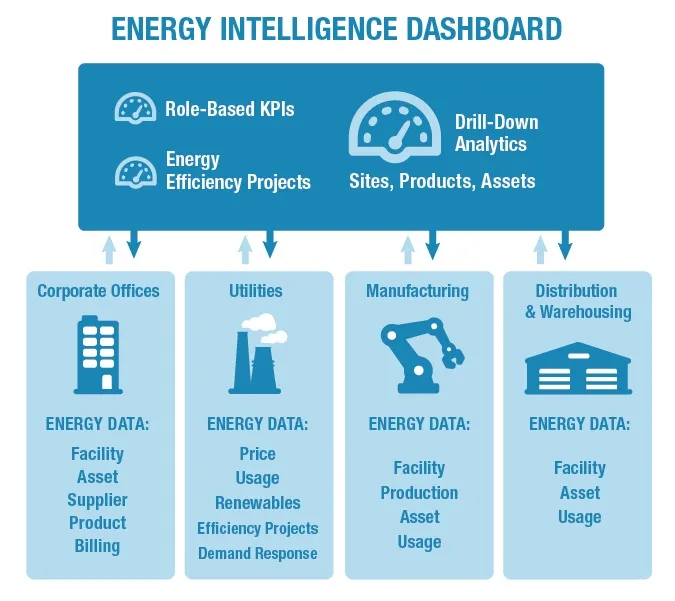
Two Systems, Zero Conversation: The Integration Gap That Is Costing Your Business More Than You Think

Two Systems, Zero Conversation: The Integration Gap That Is Costing Your Business More Than You Think

Most US businesses operate their energy monitoring systems and internal communications platforms as entirely separate infrastructures, and that separation has a real price. When energy anomalies cannot trigger automated alerts through the channels employees actually use, response times suffer and costs escalate. This piece makes the case for a unified comms-and-energy architecture and examines how forward-thinking organizations are already closing the gap.

The Carbon Cost of Connectivity: How Your API Strategy Is Quietly Running Up the Energy Bill

The Carbon Cost of Connectivity: How Your API Strategy Is Quietly Running Up the Energy Bill

Every redundant API call, every inefficient polling loop, and every legacy middleware layer represents a small but compounding energy expenditure that most integration architects never measure. Across distributed enterprise systems, these inefficiencies aggregate into a significant and largely invisible carbon and financial liability. NRGKomm examines the structural causes of integration-driven energy waste and offers a practical audit framework for addressing it.

When Your Comms Stack Doesn't Know the Lights Are On: The Compliance Gap Nobody Is Talking About

When Your Comms Stack Doesn't Know the Lights Are On: The Compliance Gap Nobody Is Talking About

Most enterprises have invested heavily in unified communications platforms, yet their IoT energy devices, HVAC controllers, and facility management systems operate in a completely separate universe. This disconnect isn't merely an operational inconvenience — it is an active compliance liability and a security surface that regulators and threat actors are beginning to exploit with alarming precision.

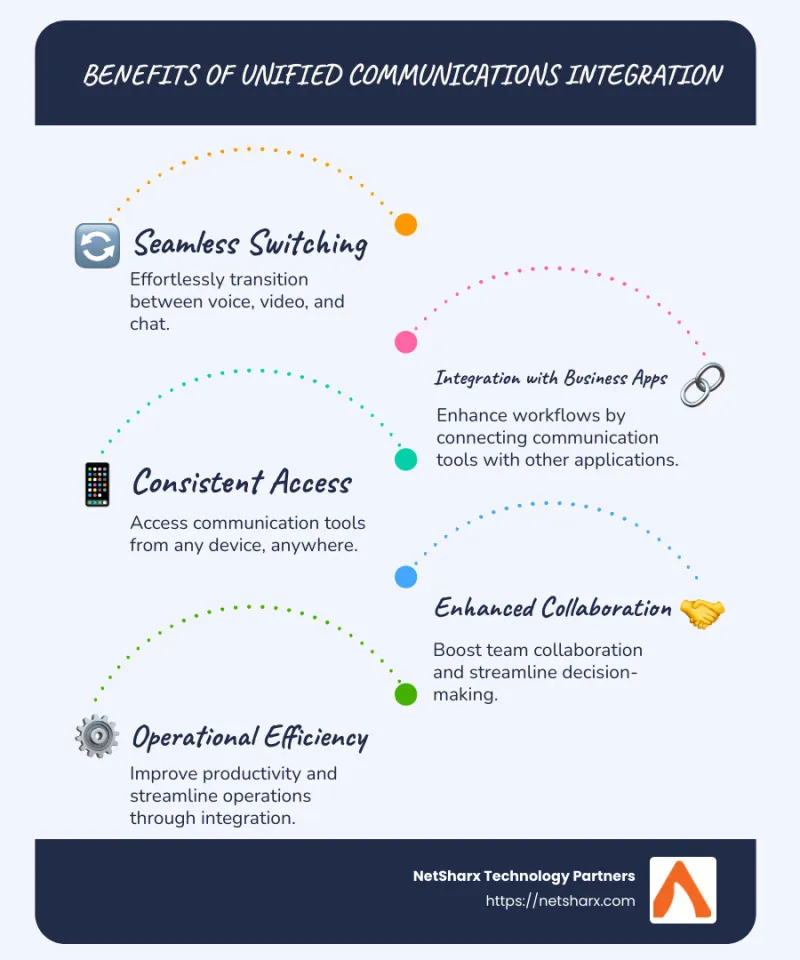
Five Platforms, Zero Coherence: The Real Price Your Business Pays for Communication Fragmentation

Five Platforms, Zero Coherence: The Real Price Your Business Pays for Communication Fragmentation

Mid-market companies running five or more disconnected communication tools are paying a price that rarely appears on a single line item — but shows up everywhere from lost productivity to elevated security risk and ballooning cloud costs. This piece makes the case for a deliberate, unified communications strategy and offers a practical audit framework for organizations ready to take stock of their tech stack.